
“Amor Fati” — Latin for “love of fate” — is the idea of accepting life as it is and trying to find something useful in whatever happens.
A Brief History
Stoicism began around the early 3rd century BCE with Zeno of Citium. Diogenes Laertius described him as “lean, longish, and swarthy; hence someone called an Egyptian vine.” Strange detail to survive for over two thousand years, but it did.
“Man conquers the world by conquering himself.” — Zeno of Citium
Who Was Zeno?
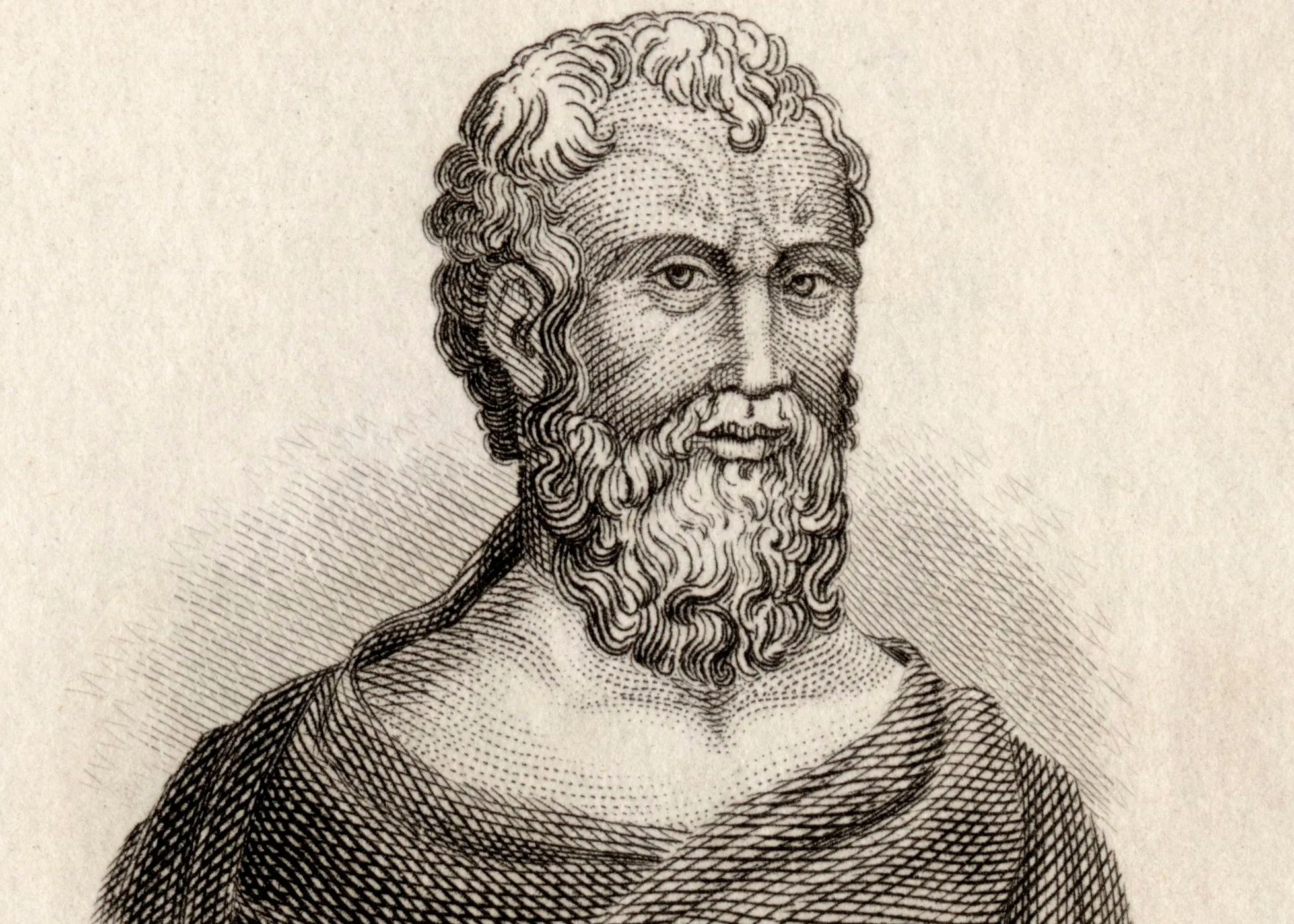
Zeno of Citium
Zeno started as a merchant. On a voyage across the Ionian Sea near Athens, he was shipwrecked. He made it ashore, found himself in a city full of philosophers, and apparently took it as a sign — later saying of the wreck, “Fortune does well to drive me to philosophy.”
He studied under various teachers for close to twenty years before eventually setting up his own lectures under a colonnaded walkway in Athens called the Stoa Poikile — the Painted Porch. That’s where the name comes from.
What Were They After?
Virtue. But not in a vague, moralistic sense.
The Stoics wanted to figure out how to actually live well. How to make good decisions, stay grounded, and reach something they called eudaimonia: a steady kind of happiness that doesn’t depend on life going perfectly.
Getting there meant following a few core principles:
- Develop moral character. Wisdom, courage, justice, and self-discipline aren’t just admirable traits — they’re the mechanism. Living virtuously is the path to fulfillment, not a side effect of it.
- Live in alignment with nature. The universe runs on reason and everything in it is connected. The Stoics thought fighting that fact was the source of most human misery. Accepting it was the first step toward peace.
- Accept fate. What’s happened has happened. What’s coming will come regardless of how much you resist it. Figure out what you can control, and put your energy there.
“The goal of life is living in agreement with Nature.” — Zeno of Citium
Epictetus
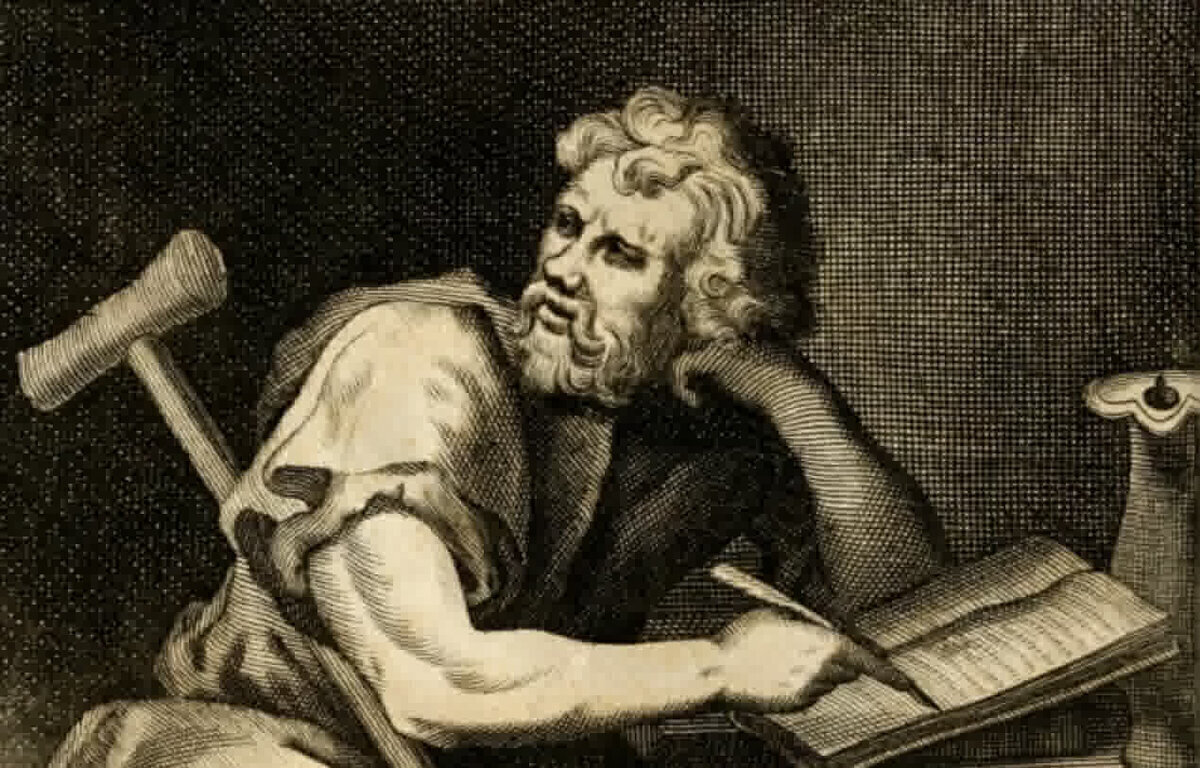
Epictetus
Epictetus was born into slavery around 50 AD and spent his early life in Rome as property of Epaphroditus, a wealthy freedman who served as secretary to Emperor Nero. As a young man he showed an interest in philosophy, and his master — unusually — allowed him to attend lectures under the Stoic philosopher Musonius Rufus.
After Nero died, Epictetus gained his freedom and later became a teacher himself.
His central idea was control — specifically, the distinction between what is and isn’t within your power. Everything hinges on that separation. Get it wrong and you’re at the mercy of circumstances. Get it right and you have something nobody can take from you.
“There is only one way to happiness and that is to cease worrying about things which are beyond the power of our will.” — Epictetus
He laid it out plainly: two kinds of things exist in life. Things you control — your thoughts, beliefs, actions, values. And everything else — the weather, other people, the economy, traffic, the laws of nature. Everything else.
There are things that are within our power, and things that fall outside our power. Within our power are our own opinions, aims, desires, dislikes — in sum, our own thoughts and actions. Outside our power are our physical characteristics, the class into which we were born, our reputation in the eyes of others, and honors and offices that may be bestowed on us.
Working within our sphere of control, we are naturally free, independent, and strong. Beyond that sphere, we are weak, limited, and dependent. If you pin your hopes on things outside your control, taking upon yourself things which rightfully belong to others, you are liable to stumble, fall, suffer, and blame both gods and men. But if you focus your attention only on what is truly your own concern, and leave to others what concerns them, then you will be in charge of your interior life. No one will be able to harm or hinder you. You will blame no one, and have no enemies. If you wish to have peace and contentment, release your attachment to all things outside your control. — Epictetus
Once that idea sinks in, your wellbeing stops depending entirely on external outcomes. You still care about life, but you stop treating the outside world like the judge of whether you’re okay.
Acceptance
Accepting the world as it is sits at the heart of Stoicism, and it comes down to one idea: control. A lot of what happens to us — other people’s behavior, our health, the economy — is simply outside our hands. The Stoics weren’t interested in pretending otherwise. Their argument was that fighting the unchangeable is just wasted energy, so point your efforts at what you can actually influence.
When you stop resisting what you can’t change, it loses its grip on you and it’s a deliberate choice about where your attention goes.
One sign you’re resisting reality is the word “should.”
- He should’ve done better.
- Things shouldn’t be like this.
Usually that word points toward an expectation placed on something you never fully controlled to begin with.
Pain is part of the deal too.
You can’t experience love, gratitude, or happiness without also becoming vulnerable to loss.
Courage
To the Stoics, courage wasn’t fearlessness. It was continuing to act according to your values despite fear.
Fortitude mattered too: the ability to endure discomfort without collapsing into despair.
“The one thing you can’t take away from me is the way I choose to respond to what you do to me. The last of one’s freedoms is to choose one’s attitude in any given circumstance.” — Viktor Frankl
Their method for building courage was straightforward: stop avoiding discomfort.
Face difficult things directly. Over time, fear becomes less abstract because you’ve already survived it before.
“A gem cannot be polished without friction, nor a man without trials.” — Seneca
Justice
Justice, in the Stoic sense, is bigger than punishment and courts. It’s about how you treat people — fairly, with respect, with some awareness that you’re part of a community and not just a self-contained unit. Your actions have moral weight whether or not anyone’s watching.
It’s also about integrity under pressure. Justice asks you to do right by people even when it’s inconvenient — treating someone fairly despite bad history, not bending the rules for a friend when you’re in a position of authority. It’s easy to be just when there’s no cost. The virtue shows up when there is one.
“Live out your life in truth and justice, tolerant of those who are neither true nor just.” — Marcus Aurelius
Temperance
Temperance is self-control — the ability to moderate your behavior even when desire, impulse, or greed is pulling in the opposite direction.
The Stoics took this seriously. Without it, they argued, your impulses become the decision-maker. You start prioritizing what feels good over what’s actually good, and the distance between you and eudaimonia grows.
Unchecked desire tends to produce a specific set of outcomes: shame, regret, frustration, suffering. Not always. But often enough that the Stoics thought it worth watching.
Temperance works the other way. When you can moderate yourself, you can focus on what actually matters. You stop procrastinating. You can break habits that aren’t serving you. You build relationships that are actually functional rather than just convenient.
“Stop allowing your mind to be a slave, to be jerked about by selfish impulses, to kick against fate and the present, and to mistrust the future.” — Marcus Aurelius
Wisdom
Wisdom is considered the most important of the four virtues. It’s the capacity to understand the world clearly and use that understanding to make good decisions.
It starts with one core claim: virtue — being genuinely good — is the only thing with real value. Everything else falls into two buckets: things that are bad, and things that are indifferent. Money, power, pleasure, status — these are indifferent. Not inherently good or bad. They can go either way. The mistake is treating them as though they have moral weight of their own.
Wisdom also includes knowing what you control and what you don’t. When you can draw that line clearly, you stop wasting energy on the wrong things and start directing it where it can actually land.
Without it, you’ll struggle to stay consistent. The universe changes constantly — that’s not a flaw in the system, it is the system. If you haven’t made peace with that, every major change will feel like an attack.
“Is any man afraid of change? What can take place without change? What then is more pleasing or more suitable to the universal nature? And can you take a hot bath unless the wood for the fire undergoes a change? And can you be nourished unless the food undergoes a change? And can anything else that is useful be accomplished without change? Do you not see then that for yourself also to change is just the same, and equally necessary for the universal nature?” — Marcus Aurelius
Fati
The four virtues are how you build toward it — wisdom to see things as they are, courage to keep moving anyway, justice to stay honest about your place among other people, temperance to not let your impulses do the deciding. None of it guarantees anything. They’re just the tools for showing up well, repeatedly, under conditions you didn’t choose.
And you didn’t choose them. You were born into a specific body, a specific country, a specific century, a specific set of circumstances already in motion before you arrived. The Stoics weren’t troubled by this — they thought it was the starting point of any honest life. You work with what’s here. You find something to love in it.
When you pull back far enough, the weight of it starts to change. The universe is roughly 13.8 billion years old. The earth has existed for about a third of that. Homo sapiens have been around for maybe 300,000 years — a rounding error on a rounding error. Your life, my life, the things that felt catastrophic last Tuesday — none of it registers at that scale.
There’s something quietly settling about that. The stakes that felt enormous turn out to be local and temporary, small against the backdrop of everything that was here before us and will be here long after. The universe was not waiting for you to get it right.
What you have is a brief window, a specific set of circumstances, and some say over how you move through them. Amor Fati doesn’t ask you to be grateful for the hard parts in some forced way. It just asks you not to waste the window fighting what’s already true.
Love what is. The rest was never yours to carry.