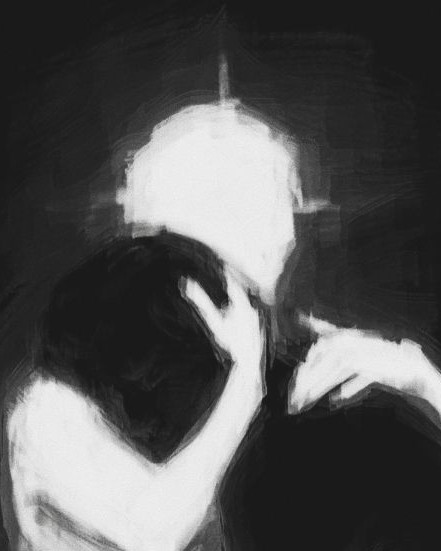
After the worst thing in someone’s life, a person might stop living inside their body. They don’t leave it — they just stop being in it. The body becomes something they carry. A coat that won’t come off. A house that won’t sell.
A friend was sexually assaulted on her campus. The institution closed ranks around the person who did it. She was left standing outside alone.
I don’t know what happened to her in those minutes. She might have gone somewhere her body wasn’t. Her body went still — that much I know. Couldn’t fight. Couldn’t run. And when it was over, she came back into herself and found that everything was technically where she left it, but none of it felt like hers.
Maybe she told herself it didn’t happen. Maybe she said it so many times it almost started to stick. That’s not denial the way people usually mean it — some character flaw, some refusal to face facts. That’s denial holding the whole thing up. You pull that wall out and the rest of it comes down too.
She reported it. She walked into an office, did what everyone says to do. The system decided she was the problem — not the violence, not the person who hurt her. She was the inconvenience. The campus didn’t offer counseling or safety. It offered silence, a quiet suggestion to handle it privately, informally, so no formal record might embarrass the institution.
Let me be plain: a university that protects its reputation over its people is not a university. It is a brand. It cared about headlines, prospective parents, the board. Whether she could sleep, walk across the buildings, finish her degree — those questions never made it into the room.
She built a version of herself that nothing had ever happened to. People liked her: funny, composed. But it was hollow, and it cost her everything to keep it standing. The campus saw that version and was relieved. See? She’s fine.
Then the blame. She might have blamed herself. Called the part that went elsewhere a coward. Punished herself for surviving the only way her body knew how. The cruel irony: if she had fought, she likely would have been hurt worse. But knowing that didn’t stop the shame.
Blame travels the shortest route home — inward. Institutions count on this. They know that if they stall long enough, she might wonder if it was that bad. If they offer no help, she might believe she doesn’t deserve it. That is not negligence. It is strategy. Cheaper to let her blame herself than to hold someone accountable.
The campus failed her. The system that should have said this is wrong said this is complicated. They stepped aside, let him pass, polished the brass, and buried the glass.
She might not sing herself to sleep. But she is still here. Still carrying this body, still moving through a world that makes it hard to talk about any of this. The real story is the quiet, daily courage of coming back. Of showering, dressing, walking into rooms inside a body that still doesn’t feel like home. We need to be brave enough to hear that story — and angry enough to do something about it.
Because somewhere right now, on a beautiful campus in a brochure, someone might be lying still. And the institution charged with their safety is already drafting a statement that says they take these matters very seriously. They don’t. They never did. And we keep letting them get away with it.